
TMJ Treatment Buzzards Bay
Effective Care for Ongoing Jaw Pain
Do you frequently struggle with jaw pain, headaches, sore facial muscles, and other symptoms? It is possible that you have TMJ disorder (TMD). Without timely care, this condition can worsen and put a serious damper on your quality of life! The good news is that our Buzzards Bay team offers non-invasive TMJ treatment that has the potential to provide lasting relief. Continue reading below to learn more, or contact our team directly to set up a consultation. We look forward to serving you!
Why Choose Canal Side Family Dental for TMJ Treatment?
- Effective, Non-Invasive Occlusal Splints
- Highly Skilled Dental Team
- Multiple Payment Options Available
What Is TMJ Disorder?
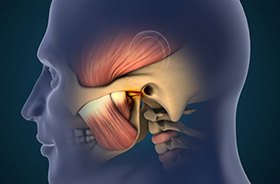
Your temporomandibular joints (TMJs) are the joints that connect your lower jaw to your skull. They are some of the most complex and often-used joints in the body. When they become irritated, inflamed, or damaged, a wide range of symptoms can result.
Virtually anyone can develop TMD. It may be caused by things like injuries, teeth grinding and clenching, poor posture, dental problems, or even a stressful lifestyle. In some cases, it has no readily identifiable cause.
Symptoms of TMJ Disorder

Some of the most common symptoms of TMD include:
- Jaw pain or tenderness, especially around the TMJs
- Frequent headaches or migraines
- Clicking, popping, or grating sounds when opening or closing your mouth
- Difficulty or discomfort while chewing
- Sore or tense facial muscles
- Limited ability to open the mouth wide
- Pain that radiates to the neck, shoulders, or ears
- Jaw locking or getting “stuck” in open or closed position
Types of TMJ Treatment
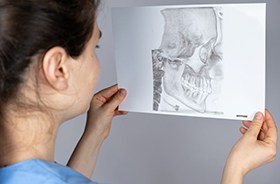
Before we can determine how to best address your TMD, our team will perform a thorough examination. We will analyze your bite, ask about your symptoms, and possibly use imaging equipment to get a look at your TMJs. Afterward, we can advise you on your next steps. For example, you might benefit from certain home remedies, such as dietary changes or heat/cold therapy. We may also recommend that you start using a custom occlusal splint.
Occlusal Splint
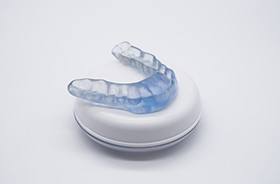
An occlusal splint is a custom oral appliance that looks like a mouthguard. It can gently reposition your jaw as well as create a barrier between your upper and lower teeth to prevent grinding and clenching. With consistent use, you may discover that your splint provides lasting symptom relief.
TMJ Treatment FAQs
Can TMJ disorder be cured permanently?
As your caring dentist in Buzzards Bay, our team wants to help you enjoy permanent relief from TMJ disorder (TMD). The custom occlusal splints that we create are designed to relieve pressure on your jaw joints and the surrounding muscles. Often, with proper use, a splint can lead to long-term results.
Of course, there is still a chance that TMD will flare up again even after successful treatment. This can occur due to new injuries, dental issues, or a particularly stressful time in life. If your symptoms come back, let us know so we can advise you on how to manage the problem.
Can TMJ disorder be fixed with braces or Invisalign?
In some cases, TMD occurs when the upper and lower teeth do not work together harmoniously, perhaps due to misalignment or malocclusion (bad bite). This discrepancy causes extra work for the jaw joints and can lead to an array of TMD symptoms.
In some cases, braces or Invisalign can fix orthodontic issues that cause TMD and provide lasting relief.
Of course, orthodontic treatment can take several months to a year or longer, so whenever possible, we favor more conservative, faster TMJ treatment options.
Is TMJ treatment safe?
TMJ treatment in Buzzards Bay is generally very safe. For example, an occlusal splint is completely non-invasive and non-pharmaceutical, so the chance of it causing severe problems is almost nonexistent.
Other types of TMJ treatment, such as surgery, carry slightly more risk. However, the benefits still generally outweigh any potential drawbacks.
If you have questions about the risks and side effects of any specific treatment, do not hesitate to ask our team.
How long does it take for a TMJ splint to work?
As you start consistently wearing your occlusal splint, you may notice that your symptoms diminish very quickly, perhaps within just a few days. However, it could take several weeks or even a few months for your therapy to reach its maximum effectiveness.
If you do not notice relief within a reasonable period of time, talk to our team. Your appliance might need some adjustments, or we might have to consider alternative approaches to your care.
Can TMJ disorder be treated without surgery?
Yes, TMD can be treated without surgery. In fact, surgery is usually reserved as a last resort for addressing this condition. More often, conservative approaches, such as an occlusal splint, are adequate for reducing symptoms and protecting the jaw joints.
If your case is severe or complex, we may refer you to a specialist who can determine if surgical intervention is necessary.