
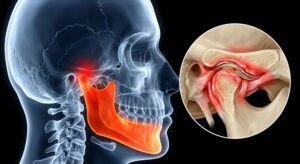
Temporomandibular joint disorder, also known as TMD or TMJ disorder, is a common problem. In fact, it afflicts millions of people. If you are currently struggling with symptoms like jaw pain, difficulty chewing, and frequent headaches, you might have it! But where should you turn for treatment? Is TMJ disorder a dental or medical issue? This blog post provides valuable information.
What Exactly Is TMJ Disorder?
Your temporomandibular joints (TMJs) are located just in front of your ears. They control movement of your lower jaw. When they become inflamed or damaged, a whole host of symptoms can be the result. The term “TMJ disorder” can be used to describe any condition that negatively affects these joints, whether the root cause is arthritis, an injury, a misaligned bite, teeth grinding, or something else.
TMD Is a Dental Issue
TMD is classified as a dental issue because your jaw joints, bite, teeth, and chewing muscles work as one system.
Plus, the underlying cause of TMD is often related to oral health. For example, if your upper and lower teeth do not work harmoniously together, this imbalance can place stress on your jaw joints that leads to TMD. This disorder may also cause (or be caused by) teeth grinding and clenching, which is also primarily a dental problem.
TMD Is Also a Medical Issue
TMD is also a medical issue because it can affect far more than your teeth. You may feel headaches, migraines, ear pain, limited jaw opening, or pain that spreads into your face and other areas. Some people also have arthritis, sleep problems, chronic pain conditions, or muscle disorders that make TMD more complex.
Additionally, TMD is classified as a descending disorder. Essentially, this means that once your jaw joints are not working properly, this can cause other parts of your musculoskeletal system to face extra strain. That is why many people with TMD struggle with pain in their neck, shoulders, and back.
Where to Turn for Treatment
If you suspect that you have TMD, your dentist’s office should be your first stop. Dentists are first-line providers for TMJ treatment because they can evaluate your bite, jaw joints, and oral habits that may be contributing to your symptoms. They understand the complex mechanics of how your teeth should work together, and they offer minimally invasive treatments that have a strong record of providing symptom relief.
In some cases, other professionals are also essential on the path to freedom from TMJ disorder. For example, chiropractic care, physical therapy, and non-surgical orthopedic treatments may also help. In rare cases, an oral surgeon is needed to perform corrective procedures on the jaw.
TMJ disorder is complex because it affects both oral and overall health! If you believe you have it, talk to your dentist to discover what you should do next.
Meet the Practice
At Canal Side Family Dental in Buzzards Bay, our team is committed to providing top-quality care in a welcoming environment. We are proud to offer non-invasive TMJ treatment with custom occlusal splints, which are designed to minimize strain on the jaw joints. To learn more about us or to request a consultation, contact our office at 508-375-3149.